






.png)


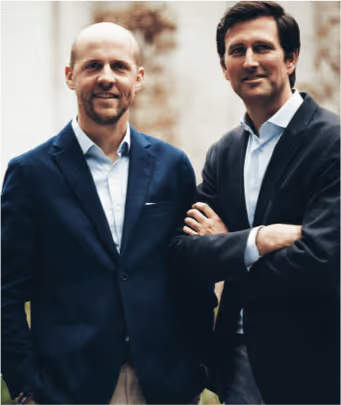

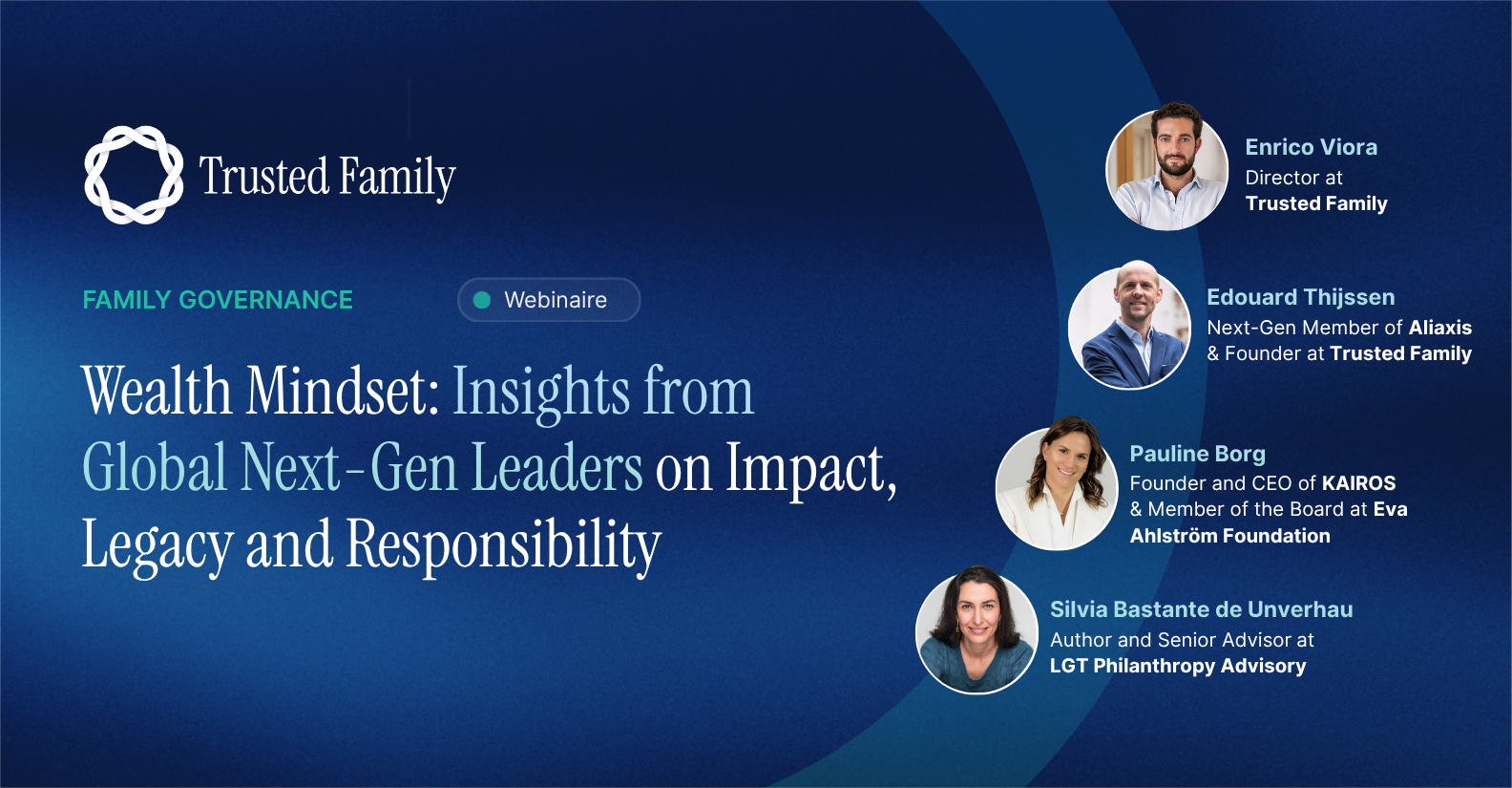
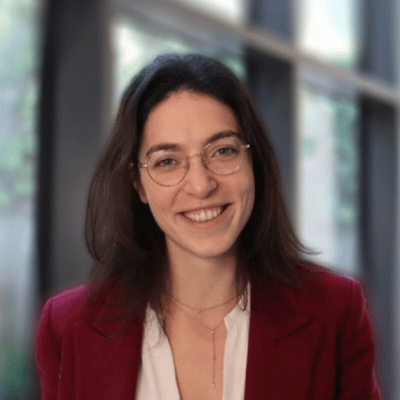
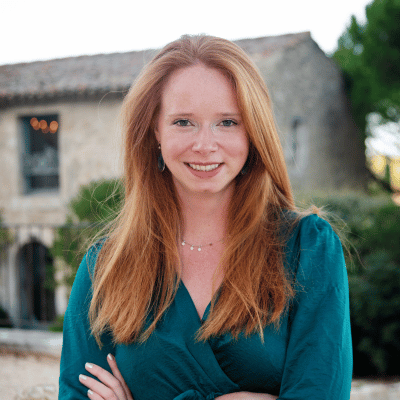
An estimated eighty trillion dollars will change hands over the next two decades, and most of the attention goes to the legal structures and tax mechanics that move it. The human side, how the next generation actually thinks and feels about the wealth it inherits, gets far less airtime. In a webinar hosted with LGT, the private banking and asset management group owned by the princely family of Liechtenstein, Silvia Bastante de Unverhau presented the findings of the bank's global Wealth for Impact study, then sat down with two fifth-generation family leaders, Pauline Borg of the Finnish Ahlström family and Edouard Thijssen, co-founder of Trusted Family, to test those findings against how they actually live.
The full recording of this webinar is available here.
Below are the themes that ran through the hour, and the questions each one raises for your own family.
01. Five pockets, one strategy
Silvia opened by reading a line from the study, in which a wealth holder rejects the idea of keeping separate pockets: one that harms the planet, one that mitigates the damage, and one that does good. The wish was for all of them to work together. That image sits at the center of the Wealth for Impact study, built on more than sixty interviews with next-generation wealth holders across thirty countries and six continents, spanning ages eighteen to seventy-seven. The study maps wealth across five dimensions: what wealth means, and then how it is created, invested, spent, given, and transferred.
The headline finding is that younger wealth holders increasingly refuse to keep those dimensions in separate boxes. Pauline Borg put it plainly when she described why she founded her advisory firm, Kairos. Families were deploying capital across a business, an investment portfolio, and a foundation, often with no logic connecting them, and, as she said, there is no business on a dead planet. For this generation, creation, investment, giving, and legacy are starting to read as a single expression of who a family is, rather than as a way to let one quietly offset the harm of another.
02. The rule that says no one works here
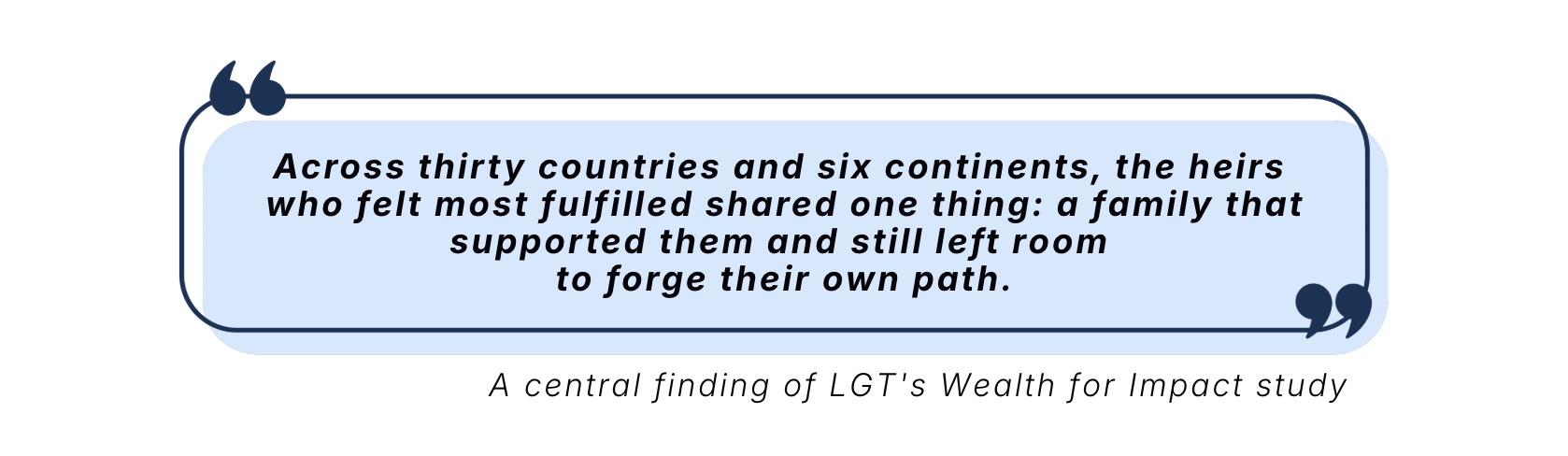
The study's finding about fulfillment is quieter than its framework, and more useful. The next-generation members who felt most engaged and at peace tended to share one experience: their families supported them and still left them free to find their own purpose. Both panelists came from families that protect that freedom by rule. In Pauline's family and in Edouard's, no family member works in the day-to-day operations of the legacy business.
Edouard recalled that his father never steered him toward the company. The advice he remembers was different: do whatever you want, but if you do it, ask whether it can scale. Pauline's parents told her to find something she enjoyed and could build a life on. That distance gave both of them room to build identities of their own, Pauline through philanthropy and impact-focused ownership, Edouard by teaching himself to code at fifteen and later co-founding Trusted Family, before each of them circled back to the questions their own families were facing.
03. Saying the quiet part out loud
A recurring finding in the study is that wealth remains a taboo subject, especially in European families, where talking about money can feel improper even at home. The cost of that silence is subtle. Families assume the next generation will absorb values by watching their parents, yet much of what matters stays implicit, and what stays implicit is rarely understood the same way by everyone. Silvia noted that the next LGT report focuses precisely here, on the transfer of wealth, because the structural questions of succession planning and family constitutions are now well charted while the foundational ones, the meaning of the wealth and the values beneath it, are not.
Both families have done the slow work of making values explicit. Pauline described a lengthy process of small working groups and outside facilitators that eventually produced a stated purpose for the family's wealth: a better world for future generations through sustainable value creation. She framed ownership the way the Patek Philippe line frames a watch, as something you look after for the next generation rather than something you own. Edouard described being raised to treat the dividends from the family business as a reserve for difficult times, never as something to lean on.
04. The structure that lets families talk
The conversations families avoid happen because someone builds a place for them, not on good intentions alone. Edouard's nuclear family holds structured meetings every two or three months, with a real agenda and written follow-up, where they discuss investment decisions alongside more personal matters. They have read books together and compared notes, including one on the five languages of love and another on each person's relationship with money, using them as a way into conversations that would otherwise feel awkward to start.
One detail showed how small the levers can be. When Edouard needed thirty thousand euros to start Trusted Family, his father could have given it to him and instead made him a zero-interest loan repayable over four years. The money was the same; the meaning was not. He found himself thinking about how to build something that could repay it. The family also began opening meetings with a simple question, how are you, which felt strange at first and is now part of how they work, on the understanding that what happens in someone's personal life tends to show up in the room whether it is named or not.
05. Engagement as a lifecycle, not an event
Pauline's family treats connection as something built over a lifetime rather than staged once a year. With four hundred and fifty members across seven generations, they run a summer camp for children from around the age of nine, so that cousins who will one day share ownership grow up as friends rather than strangers seated across a table. For adults, an education program developed with a university in Helsinki teaches the family's specific ownership strategy in specialty fibers and bio-based materials, and an internal questionnaire helps members see where they might best fit, whether in governance or in the foundation.
Edouard added a dimension families often overlook: the people who marry in. Spouses help raise the next generation and shape its relationship to the enterprise, so families benefit from deciding deliberately how open or closed they want to be, rather than letting the answer emerge by accident. Across both families the pattern is the same. Engagement is designed for each stage of life, instead of being concentrated on the generation that currently holds power.
06. Transferring power before you have to
Silvia was direct about what goes wrong. The worst transitions are the ones done very late and all at once, when a patriarch or matriarch dies and leaves behind a structure that was never prepared for the relational and emotional weight it now has to carry. Her advice, echoed by both panelists, is to start earlier and to hand over responsibility gradually, alongside the wealth. Edouard frames it as changing the relationship from parent and child to two professionals deciding together, which is easier to do in stages. He advises families not to seat the next generation directly on the holding board or the top investment committee, but to start them on a subsidiary or a new venture where the stakes are real but contained.
Values, both panelists argued, come before governance mechanics. Pauline's family found that becoming active in philanthropy opened a door for members without a business background, which led in time to observer seats on supervisory bodies and to younger members feeling genuinely heard. Edouard described a Vision 2035 exercise in which family members wore name tags showing their age in 2035, a small device that shifted the tone of the conversation and made it easier to face hard questions about how the world, and the family, will need to adapt.
What this conversation teaches us about transferring more than money
The figure that opened the webinar, eighty trillion dollars, frames the wealth transfer as a logistical problem, a matter of moving assets from one balance sheet to another. The conversation that followed pointed somewhere else. The families that hold together treat preparation as the real task, and the transfer itself as its consequence. Getting the paperwork right while getting the relationships wrong is the more common, and more expensive, mistake.
What runs underneath every theme of the hour is integration. The next generation, the study found, increasingly refuses to separate how wealth is made from how it is invested, given, and passed on. The same refusal shows up in how these families operate, where a question about feelings can sit on the same agenda as a question about returns, and where a foundation can be the doorway through which a once-distant heir first walks into the family enterprise.
Freedom did something specific in both stories. Neither family demanded that its heirs join the business, and both produced heirs who chose, on their own terms, to take responsibility for it. The freedom to leave is what seems to have made staying meaningful. That is a harder thing to build than a trust, because it cannot be imposed, only offered.
Silvia closed with a motto of the princely family that owns LGT: forward looking for generations. It is a useful test. The structures a family builds and the values it writes down are all in service of a generation that does not yet hold the wealth and may not yet be born. The recording is not a manual, and these two families are not templates. The questions they sat with, though, are the ones every family in business eventually has to answer, ideally long before a crisis asks them first.
The Trusted Family Team
![Governing Against Our Fears: Dr. Matt Allen on Why Family Governance Gets Stuck in Defense Mode [Webinar Recap]](https://cdn.prod.website-files.com/67490a3a2bcd45d4330ca4bf/6ac506b22f60fa59ea933ed3_30-09-Matt%20Allen-Is%20your%20family%20governance%20playing%20offense%20or%20defense.png)
![La charte familiale qui rassemble les générations [Résumé de webinaire]](https://cdn.prod.website-files.com/67490a3a2bcd45d4330ca4bf/6a439adea7e2eb3226ad72b4_TF-ELB%20Conseil-la%20charte%20familiale.png)
![Wealth Mindset: Insights from Global Next-Gen Leaders on Impact, Legacy and Responsibility [Webinar Recap]](https://cdn.prod.website-files.com/67490a3a2bcd45d4330ca4bf/6a32a8fffdc47887b38ba319_BANNER-WEBINARTHUMBNAIL%20(2).png)